
Introduction
Choosing the Best Earthing Solution is one of the most important steps in designing a safe and reliable electrical system. Whether it is a factory, commercial building, or power installation, a properly designed earthing system protects people, equipment, and electrical infrastructure from faults, leakage currents, and voltage surges.
In industrial environments, poor earthing can lead to panel tripping, equipment damage, transformer failures, production downtime, and serious safety risks. This guide explains how to select the right earthing solution for different applications and why modern industries increasingly prefer chemical earthing systems for long-term performance.
Why Proper Earthing Is Important
An effective earthing system provides a low-resistance path for fault current and helps :
- Protect workers from electric shock
- Prevent damage to motors, transformers, and control panels
- Reduce the risk of fire caused by electrical faults
- Improve system stability and power quality
- Ensure compliance with electrical safety standards
For industries operating continuously, proper earthing is not just a safety requirement — it is a critical part of operational reliability.
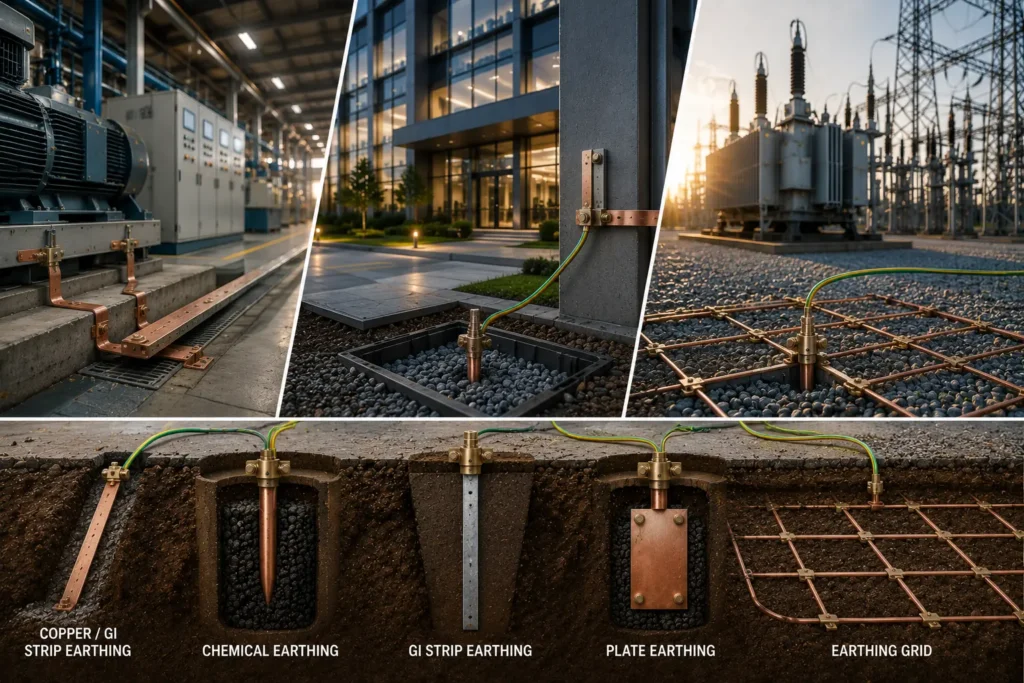
Types of Earthing Systems
1. Pipe Earthing
Commonly used in residential and small commercial applications. It is economical but may require regular maintenance in areas with high soil resistance.
2. Plate Earthing
Suitable for specific installations where larger grounding surface area is required, though installation is relatively more complex.
3. GI Strip and Copper Strip Earthing
Widely used in industrial plants for connecting equipment, panels, and structures to the grounding network.
4. Chemical Earthing
Modern chemical earthing uses conductive compounds around the electrode to maintain low and stable earth resistance even in difficult soil conditions. This makes it one of the Best Earthing Solutions for factories, commercial complexes, and power installations.
Best Earthing Solution for Factories
Factories typically operate heavy machinery, motors, welding equipment, compressors, and automation systems that generate fluctuating electrical loads.
Recommended solution:
- Chemical earthing with GI or copper strip interconnection
- Multiple earth pits connected through a proper earthing grid
- Regular earth resistance testing
Benefits for factories:
- Reduced machine downtime
- Better protection for motors and drives
- Improved safety for operators
- Reliable performance during high load conditions
For manufacturing plants in Raipur and Chhattisgarh, soil conditions can vary significantly, making chemical earthing a practical long-term solution.
Best Earthing Solution for Commercial Buildings
Commercial buildings require reliable earthing for :
- Elevators and escalators
- HVAC systems
- Fire protection systems
- IT and networking equipment
- Lighting and distribution panels
Recommended solution:
- GI strip earthing combined with chemical earthing electrodes
- Separate earthing for electrical, UPS, and IT systems where required
This approach helps maintain stable operation of sensitive electronic equipment and reduces the risk of unexpected shutdowns.
Best Earthing Solution for Power Installations
Power installations such as substations, transformers, DG sets, and distribution systems require very low earth resistance and high fault current carrying capability.
Recommended solution:
- Copper-bonded or GI chemical earthing electrodes
- Earthing grid designed according to load and fault level
- Proper bonding of transformers, panels, cable trays, and structural steel
A professionally designed earthing network improves protection system performance and enhances overall electrical reliability.
Signs That Your Existing Earthing System Needs Improvement
Consider upgrading your earthing system if you notice:
- Frequent circuit breaker or panel tripping
- Electrical shocks from equipment bodies
- Overheating of neutral or grounding conductors
- Corrosion around earth pits
- High earth resistance test results
- Repeated failure of sensitive electronic equipment
These are common indicators that the existing system may not be providing adequate fault current dissipation.
How to Choose the Best Earthing Solution
Before selecting an earthing system, evaluate:
| Factor | Recommended Consideration |
| Soil resistivity | Chemical earthing for high-resistance soil |
| Type of installation | Factory, commercial, or power application |
| Electrical load | Higher loads require stronger earthing networks |
| Equipment sensitivity | Separate clean earthing may be required |
| Maintenance requirements | Prefer low-maintenance chemical earthing systems |
A professional assessment helps determine the correct number of earth pits, electrode type, strip size, and interconnection method.
Why Chemical Earthing Is Often the Preferred Choice
Compared with conventional methods, chemical earthing offers several advantages :
- Maintains consistently low earth resistance
- Performs better in dry or rocky soil conditions
- Requires less frequent maintenance
- Provides longer service life
- Suitable for industrial, commercial, and power applications
For organizations looking for the Best Earthing Solution, chemical earthing provides an excellent balance of safety, reliability, and long-term performance.
Conclusion
Selecting the Best Earthing Solution for Factories, Commercial Buildings, and Power Installations is essential for protecting electrical equipment, ensuring worker safety, and maintaining uninterrupted operations. While conventional earthing methods may be suitable for some applications, chemical earthing combined with a properly designed grounding network offers superior performance for most industrial and commercial environments.
For projects in Raipur and across Chhattisgarh, investing in a reliable earthing system helps reduce electrical failures, improve safety standards, and support long-term operational efficiency.
Frequently Asked Questions
1) What is the best earthing solution for factories?
For most industrial plants, chemical earthing with GI or copper strip interconnection is considered one of the most effective solutions because it provides low and stable earth resistance.
2) Is chemical earthing better than pipe earthing?
Yes. Chemical earthing generally offers better performance, lower maintenance, and more stable resistance values, especially in areas with challenging soil conditions.
3) Why is low earth resistance important?
Low earth resistance ensures that fault current is safely discharged into the ground, helping protective devices operate quickly and reducing the risk of equipment damage and electric shock.
4) How often should industrial earthing be tested?
Industrial earthing systems should be inspected regularly and tested periodically according to the operating environment, load conditions, and applicable electrical safety standards.